
New York City, January 6, 2026
New York City’s congestion pricing program, initiated on January 5, has significantly reduced traffic in the Central Business District, achieving an 11% decrease and generating $550 million for public transit improvements. As vehicle numbers drop, travel times have improved, safety has increased, and noise complaints have declined in the area. Despite facing legal challenges, the initiative exemplifies how effective policy can enhance urban mobility and support local businesses, underscoring the city’s commitment to innovative transportation solutions.
New York City
Congestion Pricing Program Sees Remarkable Results in First Year
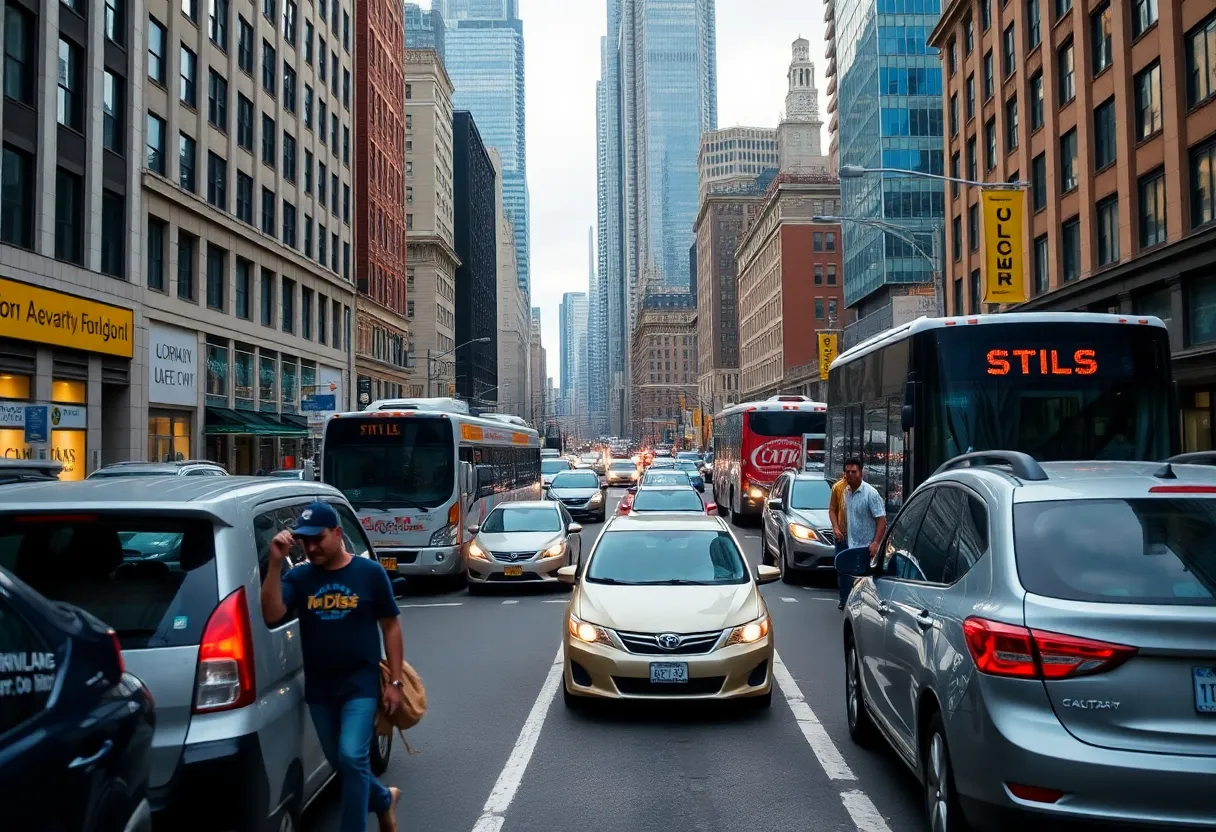
New York City’s congestion pricing initiative, launched on January 5, 2025, is already making waves in the realms of traffic management and public transit financing. With a reduction of about 27 million vehicles entering Manhattan’s Central Business District (CBD), the program has successfully achieved an 11% decrease in daily traffic, marking a vital step towards easing congestion in one of the busiest cities in the world. As this innovative approach unfolds, it demonstrates the potential for smart regulation to foster not only smoother commutes but also stronger public transport funding.
The Metropolitan Transportation Authority (MTA) reports that the program has generated approximately $550 million within its first year—$50 million above initial projections. These funds are earmarked for essential transit improvements, such as the Second Avenue Subway Phase 2, signal upgrades, new railcars and buses, and enhancements to accessibility. This influx of revenue showcases how effective policies can benefit everyday commuters while nurturing the economic landscape of New York City.
Impact on Travel Times and Traffic Flow
The introduction of congestion pricing has led to significant improvements in travel times across various river crossings. Notably, the Lincoln Tunnel witnessed a staggering 51% reduction in travel times during morning rush hours. Additionally, bus speeds have increased by 2.3%, while vehicle speeds have risen by 4% on weekdays and an impressive 6.2% on weekends. These advancements not only alleviate frustration for commuters but enhance the overall efficiency of our transportation network, thus encouraging local economic activity.
Enhancements to Safety and Community Well-Being
With decreased traffic comes increased safety. The MTA reports a 7% drop in crashes and an 8% reduction in traffic injuries within the congestion zone. Furthermore, residents in the area are experiencing a 17% decline in noise complaints compared to the previous year. These outcomes underline the importance of well-structured, evidence-based policies in prioritizing community health and safety, all while benefiting local businesses that thrive in more vibrant and accessible neighborhoods.
Facing Challenges with Resilience
Despite the positive outcomes, the congestion pricing program has encountered legal hurdles. Nevertheless, the benefits witnessed so far highlight the resilience of New York City’s commitment to innovative transportation solutions. As the program continues to evolve, it serves as a testament to how proactive governmental policies, coupled with community support, can lead to meaningful progress in urban mobility and economic sustainability.
Key Features of the Congestion Pricing Program
As the first-year results come in, we can better understand the key features of this transformative program:
| Feature | Details |
|---|---|
| Implementation Date | January 5, 2025 |
| Toll Amount | $9 during peak hours |
| Revenue Generated in First Year | $550 million |
| Reduction in Daily Traffic | 11% decrease |
| Improvement in Travel Times | Up to 51% faster in certain crossings |
| Decrease in Crashes | 7% reduction |
| Decrease in Noise Complaints | 17% reduction compared to 2024 |
Conclusion
The early success of New York City’s congestion pricing program emphasizes the potential of well-structured policies to enhance traffic flow, increase safety, and secure vital funding for public transit improvements. As we reflect on the first year, the focus shifts to maintaining momentum and further supporting local businesses that play an integral role in the city’s dynamic economy. Engaged citizens can make a significant difference by supporting initiatives that foster innovation and growth in New York City.
Frequently Asked Questions (FAQ)
What is the congestion pricing program in New York City?
The congestion pricing program charges vehicles a toll to enter Manhattan’s Central Business District (CBD) during peak travel times, aiming to reduce traffic congestion and fund transit improvements.
How much has traffic decreased since the program’s implementation?
Approximately 27 million fewer vehicles entered the CBD in the first year, resulting in an 11% reduction in daily traffic compared to the previous year.
How much revenue has the program generated?
The program has generated about $550 million in revenue during its first year, surpassing initial projections by $50 million.
What improvements have been observed in travel times?
Travel times have improved across various river crossings, with the Lincoln Tunnel experiencing a 51% reduction in travel time during morning rush hours. Bus speeds have increased by 2.3%, and vehicle speeds have risen by 4% on weekdays and 6.2% on weekends.
Has the program affected safety and noise levels?
Yes, there has been a 7% decrease in crashes and an 8% reduction in traffic injuries within the congestion zone. Noise complaints have decreased by 17% compared to 2024.
Now Happening on X
- @NYDailyNews (January 6, 2026): NYC congestion pricing by the numbers: 27 million fewer cars, $550 million in new revenue. View on X
- @berkie1 (January 5, 2026): 27 Million Fewer Car Trips after a year of congestion pricing, with 73,000 fewer vehicles daily, $550M for public transit, reduced noise complaints, and improved speeds outside CBD. View on X
- @6sqft (January 5, 2026): One year of congestion pricing in NYC results in 27 million fewer vehicles and $550M in revenue. View on X
- @michaeljlewis75 (January 6, 2026): New Yorkers who supported congestion pricing are vindicated as traffic is down, speeds are up, and the MTA has raised nearly $550 million for transit improvements. View on X
- @CBSNewYork (January 5, 2026): Traffic in NYC’s congestion zone is down 11% with 27 million fewer cars entering in 2025 since the program’s start. View on X
- @gecko39 (January 5, 2026): Article on life after a year of congestion pricing highlights 27 million fewer car trips and improved commuting options like foot, bus, bike, subway, and ferry. View on X
- @TransitTalent (January 5, 2026): 27 Million Fewer Car Trips: Life After a Year of Congestion Pricing in New York City. View on X
Deeper Dive: News & Info About This Topic
HERE Resources
New York City Infrastructure Funding Halted
MTA Board Approves $21 Billion Budget Amid Fare Hike Concerns
Top 7 Small Business Funding Companies in New York
New York City Faces Major Decline in Foreign Tourism Revenue
Governor Hochul’s Congestion Pricing Advice Sparks Business Concerns
New York City’s Congestion Pricing Boosts Local Businesses
New York Times Sues Perplexity AI Over Copyright Infringement
New York City Businesses Implement Congestion Toll on Customers
Four-Alarm Fire Rips Through Santiago’s Beer Garden in East Harlem
New York City Achieves Historic Decline in Traffic Fatalities

Author: STAFF HERE NEW YORK WRITER
The NEW YORK STAFF WRITER represents the experienced team at HERENewYork.com, your go-to source for actionable local news and information in New York, the five boroughs, and beyond. Specializing in "news you can use," we cover essential topics like product reviews for personal and business needs, local business directories, politics, real estate trends, neighborhood insights, and state news affecting the area—with deep expertise drawn from years of dedicated reporting and strong community input, including local press releases and business updates. We deliver top reporting on high-value events such as New York Fashion Week, Macy's Thanksgiving Day Parade, and Tribeca Film Festival. Our coverage extends to key organizations like the Greater New York Chamber of Commerce and United Way of New York, plus leading businesses in finance and media that power the local economy such as JPMorgan Chase, Goldman Sachs, and Bloomberg. As part of the broader HERE network, including HEREBuffalo.com, we provide comprehensive, credible insights into New York's dynamic landscape.