
News Summary
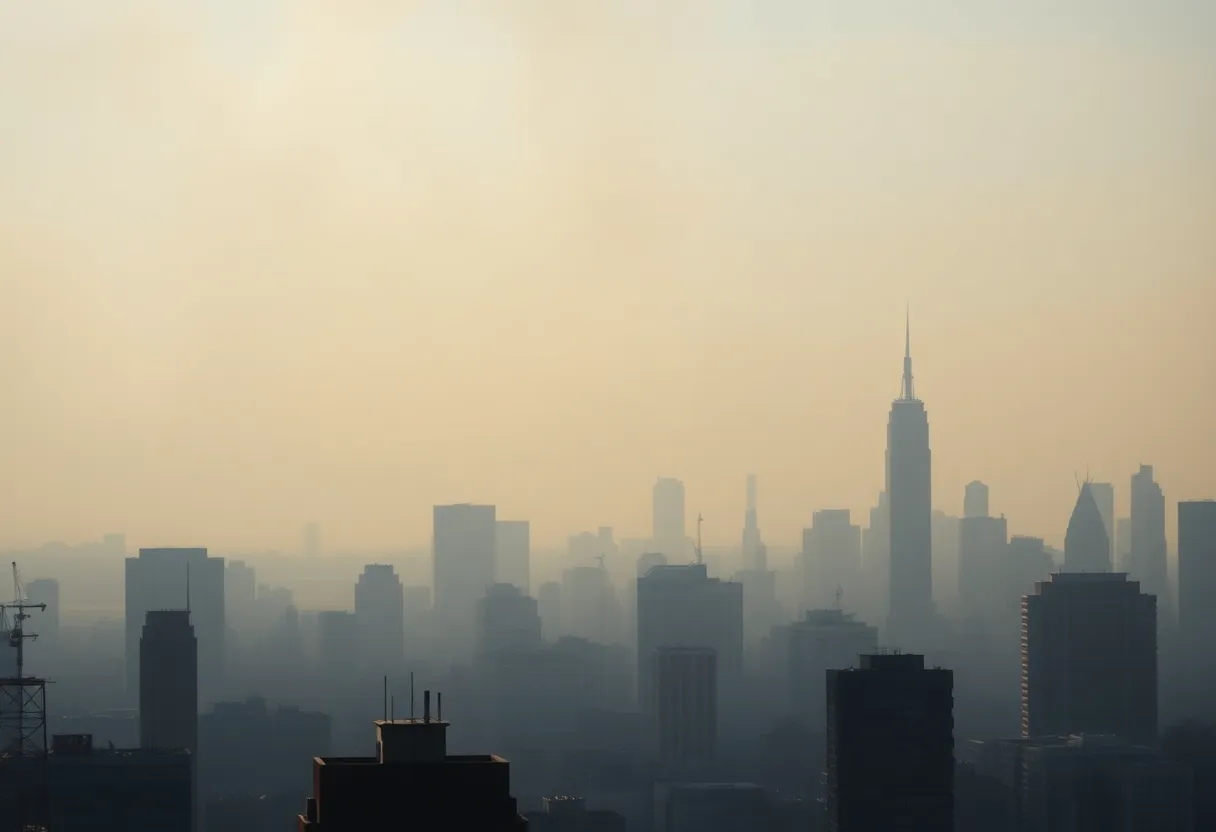
New York is facing hazy skies and poor air quality due to smoke from Canadian wildfires, prompting health officials to issue an Air Quality Health Advisory. The advisory impacts multiple regions, including the New York City Metro area and various counties throughout the state. Health experts recommend that sensitive groups minimize outdoor exposure and take necessary precautions, particularly as the air quality index remains high. Over 700 wildfires are currently active in Canada, with significant environmental implications for air quality and public health across borders.
New York is experiencing hazy skies and declining air quality as a result of Canadian wildfire smoke, prompting officials to issue an Air Quality Health Advisory. This alert is expected to remain in effect from Monday into Tuesday across various regions of the state, including the New York City Metro area, which encompasses New York City, Rockland County, and Westchester County.
The advisory extends to multiple regions, including the Lower Hudson Valley, Upper Hudson Valley, Adirondacks, Eastern Lake Ontario, Western New York, and Central New York. Specifically, the affected counties include:
- Lower Hudson Valley: Dutchess, Orange, Putnam, Ulster, and Sullivan counties.
- Upper Hudson Valley: Albany, Columbia, Fulton, Greene, Montgomery, Rensselaer, Saratoga, Schenectady, Schoharie, and Washington counties.
- Adirondacks: Clinton, Essex, Franklin, Hamilton, northern Herkimer, Lewis, St. Lawrence, and Warren counties.
- Eastern Lake Ontario: northern Cayuga, Jefferson, Monroe, Oswego, and Wayne counties.
- Western New York: Cattaraugus, Chautauqua, Erie, Genesee, Niagara, Orleans, and Wyoming counties.
- Central New York: Allegany, Broome, southern Cayuga, Chemung, Chenango, Cortland, Delaware, southern Herkimer, Livingston, Madison, Onondaga, Oneida, Ontario, Otsego, Tioga, Tompkins, Schuyler, Seneca, Steuben, and Yates counties.
The Department of Environmental Conservation (DEC) and the Department of Health (DOH) issue such advisories when ozone or fine particulate matter (PM2.5) pollution levels are projected to exceed an Air Quality Index (AQI) value of 100. The AQI is an important tool used to assess air quality and its associated health risks, with higher values indicating greater health concerns.
On Tuesday morning, New York City’s air quality index was recorded at 121, categorizing it as unhealthy for sensitive groups, including individuals with asthma and heart disease. Reports indicated that New York City had the ninth-worst air quality in the world that day, with only Detroit ranking worse among U.S. cities.
Currently, over 700 wildfires are raging across Canada, with approximately 300 of these fires classified as out of control. This year alone, more than 16 million acres have burned, which is more than double the ten-year average for wildfire damage in Canada.
Health experts caution that those with respiratory issues should minimize outdoor exposure during this alert. Specifically, individuals with asthma or other lung diseases are advised to remain indoors. Those who must go outside are suggested to wear N95 or K95 masks for protection. Even healthy individuals are advised to avoid engaging in strenuous outdoor activities, such as exercising, during this period of compromised air quality.
New York state health officials predict that hazardous air quality conditions may persist at least until Thursday, as ongoing assessments indicate continually high levels of particulate matter in the air.
Residents are urged to monitor their health throughout this advisory period, noting that any early signs of concern, such as coughing, should prompt them to take further precautions. Aside from New York, other states currently under active air quality alerts include Michigan, Minnesota, Wisconsin, Illinois, Indiana, Ohio, Vermont, New Hampshire, Massachusetts, Connecticut, Pennsylvania, and New Jersey.
The ongoing wildfires in Canada not only highlight the challenges of wildfire management but also underscore the interconnected nature of environmental issues across borders, affecting air quality and public health in regions far removed from the source of the fires.
Deeper Dive: News & Info About This Topic
- The New York Times
- Wikipedia: Air Quality
- ABC 7 NY
- Google Search: Canadian wildfires
- NBC New York
- Google Scholar: Wildfire smoke air quality
- CBS News
- Encyclopedia Britannica: Wildfires
- Syracuse.com
- Google News: Wildfire smoke