

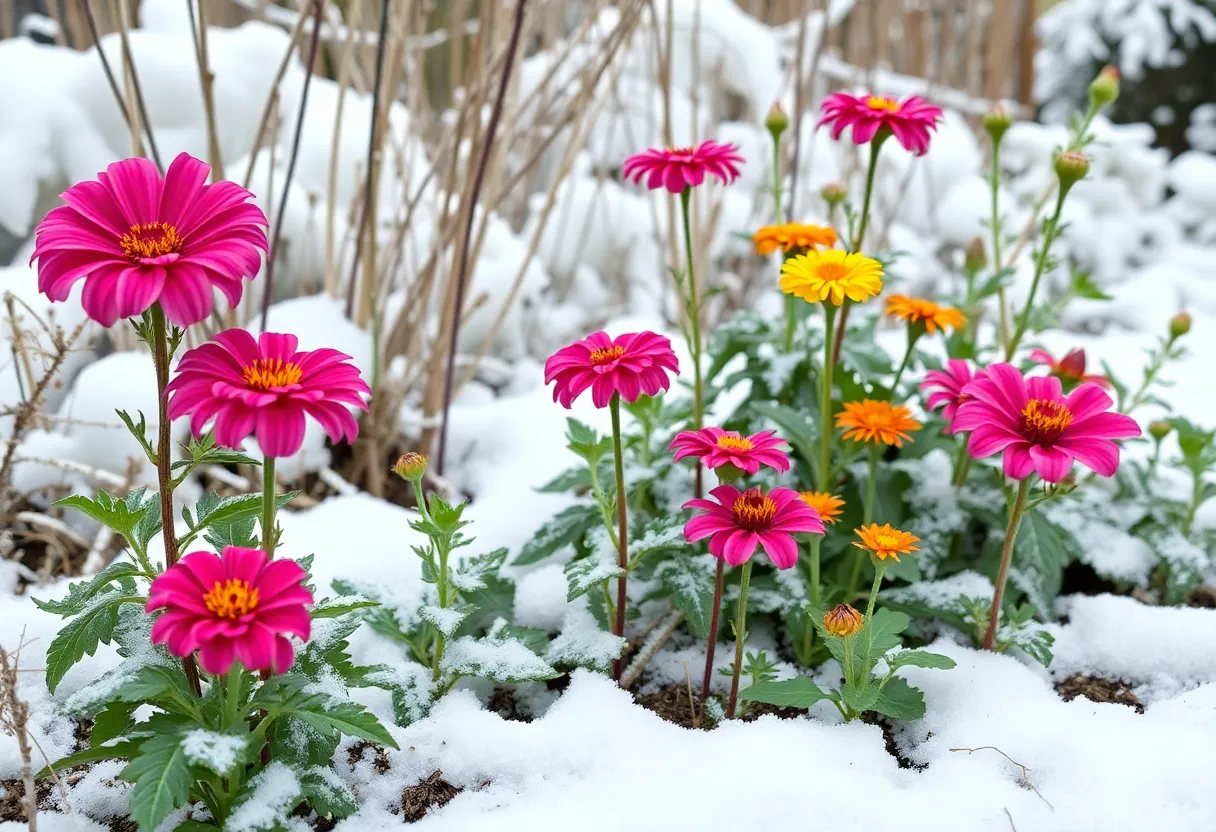
10 Hardiest Plants for Surviving New York Winters in Your Garden
Winter in New York presents formidable challenges for gardening. Temperatures frequently plunge below freezing, combined with heavy snow accumulation and persistent wind exposure. Successfully cultivating a resilient garden relies heavily on selecting plants with proven cold tolerance. The following detailed overview identifies ten hardy species that demonstrate exceptional adaptability to New York’s cold climate, ensuring vibrant landscape appeal year-round.
1. Hellebores (Lenten Roses)
Overview and Adaptability
Hellebores are perennial evergreen plants notable for their early bloom, often emerging in late winter or early spring, sometimes even through accumulated snow. Their leathery, dark green leaves maintain color during winter, providing consistent visual interest. These plants prefer shaded or semi-shaded locations and well-drained, fertile soil, making them ideal for woodland or shaded border gardens.
Cold Tolerance and Variety Options
Helleborus orientalis, among other varieties, exhibits high resilience in cold temperatures, withstanding temperatures as low as -20°F (-29°C) when established. Their ability to bloom early is crucial for adding color during months when most garden plants remain dormant. The wide range of flower shades—reds, pinks, greens, and maroons—allows versatile landscape design.
2. Snowdrops (Galanthus nivalis)
Early Blooming and Resilience
Snowdrops are among the earliest flowering bulbs, often pushing through snow cover in late winter. Their delicate, nodding white flowers symbolize resilience and renewal. They thrive in full sun to partial shade and prefer well-drained soil rich in organic matter. Once established, they naturalize, forming charming drifts that enhance garden texture.
Ecological Benefits
As early bloomers, snowdrops serve as vital nectar sources for emerging pollinators such as bees, supporting local ecosystems during scarce food periods. Their robustness allows them to survive on minimal care, making them ideal for low-maintenance winter gardens.
3. Yew (Taxus baccata)
Evergreen Structure and Cold Tolerance
Yew is an undemanding, evergreen conifer that retains its dense, dark green foliage throughout winter. It tolerates a wide range of environmental conditions, including shade and wind exposure, often found along urban and shaded hillside locations. Its slow growth rate necessitates minimal pruning or maintenance.
Ornamental Features
The bright red berries produced in fall stay visible well into winter, accentuating landscape interest. Its foliage provides excellent winter texture, acting as a structural anchor in mixed borders or as topiary specimens. Yew can be shaped into formal hedges or kept as free-standing trees, adapting well to various design intents.
4. Inkberry Holly (Ilex glabra)
Native Resilience and Maintenance
Inkberry Holly epitomizes native resilience, thriving in New York’s climate with minimal fuss. It is a dense, compact shrub with small, dark green, leathery leaves that remain evergreen. Distinguished by its ability to tolerate poorly drained soils, it is highly adaptable to varying moisture conditions and partial sun exposure.
Wildlife and Aesthetic Value
Female plants produce black berries, which persist into winter, attracting local bird populations. Its overall durability and low-maintenance requirement make it an excellent choice for foundation planting and screening. The shrub’s natural form provides structure and texture, suitable for winter landscape composition.
5. Winter Jasmine (Jasminum nudiflorum)
Early Spring Color and Growth Habit
Winter Jasmine begins flowering in January, producing bright yellow, star-shaped blooms that stand out against the dormant landscape. Its flexible growth habit allows it to cascade over fences, walls, or rock gardens, establishing quick coverage.
Growth Conditions and Care
It prefers well-drained, moderately fertile soil, flourishing in full sun but tolerating partial shade. Its low maintenance needs make it a favored choice for color reinforcement where winter interest is desired. The plant is drought-tolerant once established, further enhancing its garden value.
6. Camellias (Camellia japonica)
Late Fall to Early Winter Blooming
Camellias are evergreen shrubs renowned for their lush, rose-like flowers appearing during late fall through early winter. Camellia japonica demonstrates high cold hardiness and tolerates temperatures down to approximately 0°F (-18°C), especially with site protection such as mulching or windbreaks.
Design and Placement Tips
They thrive in rich, acidic soil with consistent moisture. Planted near foundations or in large containers, they cluster flower displays during the colder months. Their glossy foliage and vibrant blossoms make them focal points in winter landscapes, elevating aesthetic appeal during the dormant season.
7. Heuchera (Coral Bells)
Colorful Foliage and Adaptability
Heuchera offers a spectrum of leaf colors—from deep burgundy to bright lime green and silvery purple—making it invaluable for winter contrast. These compact perennial plants form rosettes, often expanding slowly over time, and are highly tolerant of cold, thriving in USDA zones 4-9.
Multi-Season Interest
While their foliage provides visual interest from spring through fall, the delicate flower spikes attracting hummingbirds emerge in late spring and early summer. Their ability to withstand frost ensures they remain a staple component of winter assemblages, especially when combined with evergreen plants.
8. Yarrow (Achillea millefolium)
Durable and Drought-Resistant
Yarrow is a hardy perennial resilient to drought, poor soils, and extreme cold. Its flat-topped, clustered flowers come in various colors—white, yellow, pink—and attract pollinators late into the growing season. Its fine foliage remains attractive even after frost.
Growth and Maintenance
Yarrow prefers full sun but adapts to partial shade. It spreads gradually, forming stable clumps that do not require frequent division. The plant’s durability makes it an excellent resource for establishing low-maintenance, winter-tolerant perennial beds.
9. Winter Aconite (Eranthis hyemalis)
Vivid Yellow Blooms in Late Winter
Winter Aconite produces bright yellow, cup-shaped flowers emerging just as winter begins. Its lush green, finely divided leaves form a base for the cheerful blooms, which typically grow up to 6 inches tall.
Growing Conditions and Use
It thrives in full sun to partial shade and prefers rich, well-drained soil. Its early bloom cycle makes it ideal for naturalizing under deciduous trees or along garden borders, adding immediate color when most perennials are dormant.
10. Panicle Hydrangea (Hydrangea paniculata)
Multi-Season Interest
Panicle Hydrangea produces large, showy summer flower panicles that dry naturally into winter sculptures, offering lasting landscape interest. The dried blooms turn to shades of pink, tan, and russet, adding warm tones to winter scenes.
Hardiness and Care
These hydrangeas handle cold temperatures reliably, often surviving in USDA zones 3-8 when planted correctly. They prefer full sun to partial shade and well-drained soil. Even after harsh winters, they rebloom robustly and maintain structural integrity, making them dependable in challenging climates.
Conclusion
Integrating these hardy plants into your New York garden guarantees resilience against the winter extremes common in the region. Proper planting practices, site selection, and seasonal care will maximize their survival and visual impact. These species combine beauty, adaptability, and longevity, ensuring a vibrant landscape even during the coldest months.