
Discovering the Top Private Elementary Schools in New York City
New York City is renowned for its vibrant educational landscape, featuring a multitude of private elementary schools that cater to diverse philosophies and student needs. These institutions often combine rigorous academics with broad extracurricular offerings, aiming to cultivate well-rounded individuals. Below is a detailed overview of some of the most distinguished private elementary schools within the city.
Allen-Stevenson School
Location: Upper East Side, Manhattan
Grades: Kindergarten through 8th grade
Enrollment: Approximately 389 students
Overview: Established in 1883, Allen-Stevenson School has a longstanding tradition of academic excellence tailored for boys. The school emphasizes a comprehensive curriculum that balances classical academics with active participation in sports and arts. Its sports programs are notably robust, with offerings including eight interscholastic sports such as cross country, soccer, flag football, basketball, wrestling, track, lacrosse, and baseball. This focus fosters teamwork, discipline, and physical development. The school’s competitive sports teams, such as the varsity basketball team, have earned championships in the Manhattan Private Middle School League, highlighting its commitment to athletic achievement.
Spence School
Location: Upper East Side, Manhattan
Grades: Kindergarten through 12th grade (Lower School for K-4)
Enrollment: Approximately 740 students
Tuition: $68,480 for the 2025–2026 academic year
Overview: Founded in 1892, the Spence School specializes in girls’ education grounded in liberal arts and sciences. With a student-teacher ratio of 7:1, its small class sizes allow for personalized instruction. The campus environment encourages intellectual curiosity and leadership. The school maintains strong connections with sister institutions such as The Brearley School, The Chapin School, and Collegiate, fostering a collaborative network that enhances academic and extracurricular opportunities. The school’s high tuition reflects its premium facilities, faculty quality, and comprehensive programming designed to prepare students for top-tier colleges.
Saint Ignatius Loyola School
Location: Upper East Side, Manhattan
Grades: PreK-3 through 8th grade
Enrollment: 535 students (2024–2025)
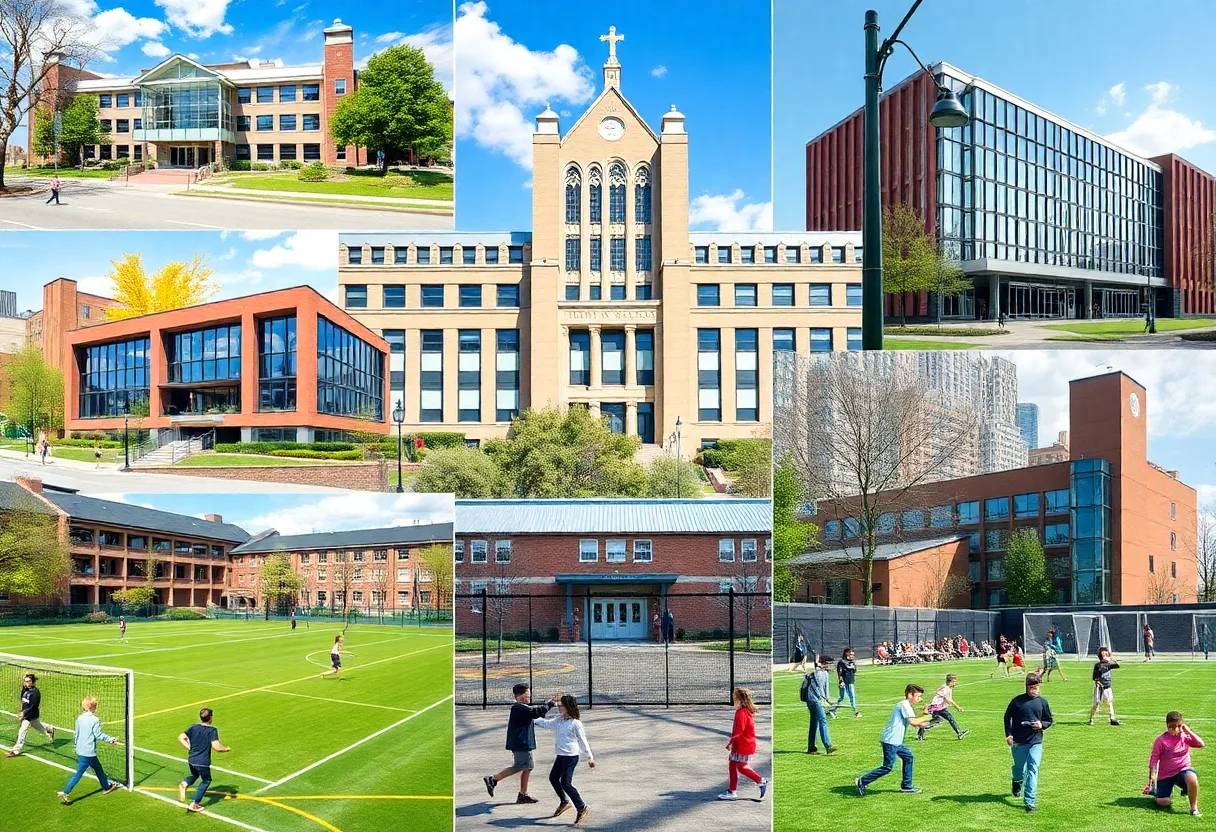
Overview: Founded in 1854, Saint Ignatius Loyola School offers a co-educational environment closely tied to the Catholic Archdiocese. The school operates across two campuses: the Upper Campus at 48 East 84th Street (grades 1–8) and the Lower Campus at 240 East 84th Street (PreK–K). The Upper Campus, housed in a historic building from 1900, provides state-of-the-art classrooms, science labs, art studios, and a gymnasium. The school emphasizes academic rigor, character development, and community service, aiming to build ethical leaders while nurturing individual talents.
Ethical Culture Fieldston School
Location: Upper West Side, Manhattan, and Riverdale, Bronx
Grades: PreK through 12th grade
Enrollment: Approximately 1,700 students
Tuition: $63,020 for the 2023–2024 academic year
Overview: Established in 1878, Ethical Culture Fieldston School stands out for its progressive educational philosophy and deep commitment to ethics and social responsibility. Its dual-campus setup allows for a seamless academic journey from early childhood through high school. The school is recognized for a broad curriculum that incorporates ethics, community service, and environmental stewardship alongside traditional academics. It participates in the Ivy Preparatory School League, providing competitive sports and leadership development. The school’s emphasis on ethical learning attracts families seeking an education rooted in character and social advocacy.
Collegiate School
Location: Upper West Side, Manhattan
Grades: Kindergarten through 12th grade
Enrollment: 666 students (2024–2025)
Overview: With origins dating back to 1628, Collegiate School is distinguished as the oldest independent school in the United States. Its rigorous academic programs span from early childhood through college preparatory upper grades. Collegiate maintains a balanced focus on academics, leadership, and extracurricular excellence, comprising divisions for Lower, Middle, and Upper School students. The school’s low student-teacher ratio (about 5.1:1) supports personalized instruction. The institution’s history of academic achievement and leadership development shapes many of New York City’s influential professionals and leaders.
Tuition and Financial Aid in NYC Private Elementary Schools
Private school tuition in New York City varies significantly, reflecting differences in facilities, programs, and prestige. Many of the most esteemed institutions charge upward of $60,000 annually. For instance, the tuition for the Spence School during 2025–2026 is listed at $68,480. The high cost, however, is often offset by extensive financial aid programs.
Numerous schools allocate resources to scholarships and grants aimed at increasing accessibility for diverse populations. For example, schools such as Spence report that over 20% of their students benefit from financial assistance, with grants averaging around $40,000 per year. These programs aim to foster equity while maintaining high standards.
Admissions Procedures and Criteria
The admissions process for private elementary schools in New York City is competitive and rigorous. Schools typically conduct multiple assessments, including academic testing, interviews, and background evaluations. Prospective students are often evaluated for academic readiness, social skills, and overall compatibility with the school’s environment.
For example, Saint Ignatius Loyola School reports an acceptance rate below 10% for unconnected children applying for kindergarten. The process includes mandatory parent information sessions, campus tours, and in-person assessments of academic skills and personal qualities. Such selective admissions ensure schools maintain their standards and community integrity.
Families are advised to start planning early, gather comprehensive documentation, and meet deadlines carefully. Each institution’s specific requirements can differ substantially, necessitating thorough research and preparation.