
10 Inspiring Ways to Incorporate Edible Plants into Your New York Garden Design
Introduction
Transforming a typical garden into a productive haven offers both aesthetic appeal and practical benefits. In a city like New York, where space is often limited, integrating edible plants into garden designs maximizes utility, enhances sustainability, and adds vibrancy. Thoughtful incorporation of edible landscaping aligns beauty with function, fostering a garden that’s both visually stunning and nutritionally rewarding.
1. Integrate Edible Landscaping into Your Front Yard
Designing your front yard to include edible plants creates an inviting and functional space. Combining ornamental elements with food-producing plants adds both beauty and utility. For example, planting serviceberry (Amelanchier canadensis) introduces delicate white blossoms in spring and edible berries later in the season. Such shrubs are ideal for urban gardens due to their compact size and adaptability.
This approach encourages neighborhood interaction and demonstrates sustainable living practices, turning your property into a model of urban edible landscaping. Select native or well-adapted varieties to ensure low-maintenance growth suited to New York’s climate.
2. Utilize Vertical Gardening Techniques
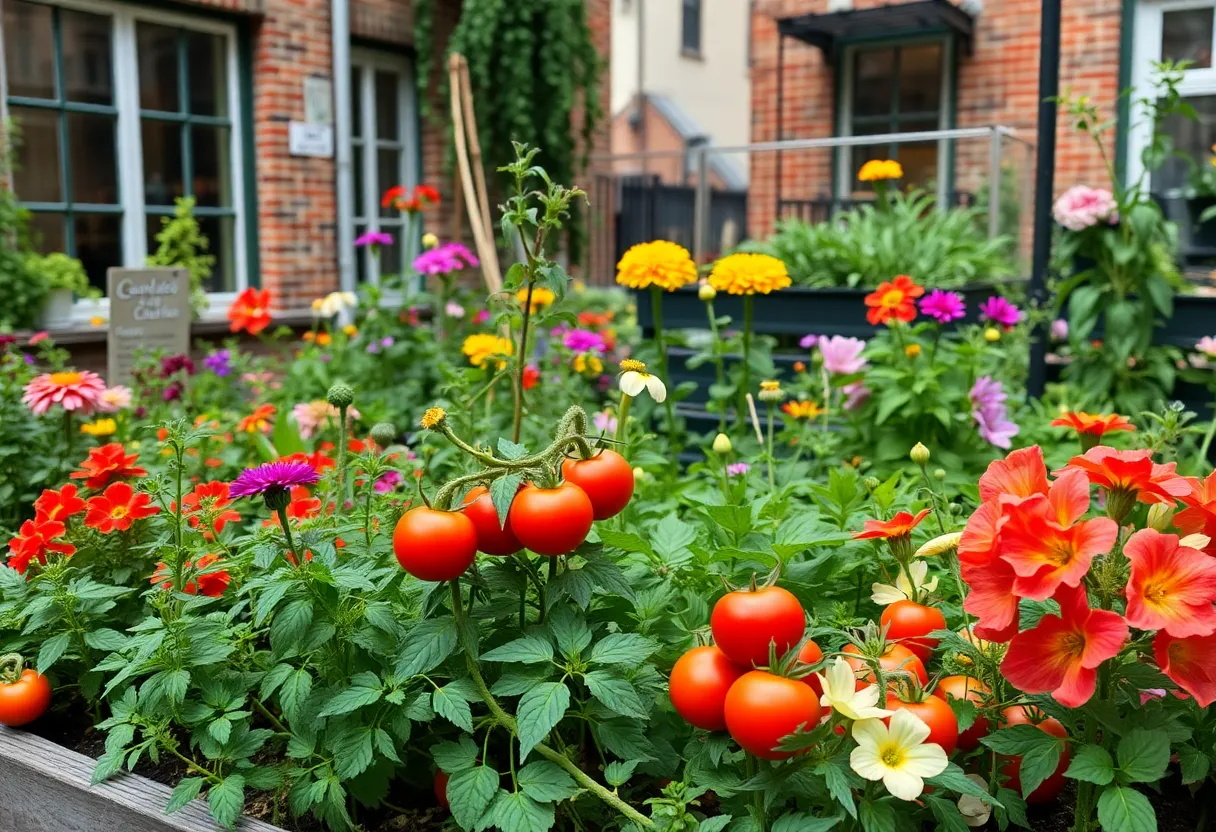
Maximize limited space through vertical planting methods. Installing trellises, wall-mounted planters, or living walls allows cultivation of climbing vegetables, which can include tomatoes, cucumbers, and green beans. Vertical gardening makes efficient use of ground space and adds architectural interest.
Cherry tomatoes are particularly effective for vertical setups owing to their bushy growth and high yields in containers. Vertical strategies are especially advantageous in urban environments where ground space is constrained, enabling productive gardens even on balconies and small patios.
3. Create a Native Edible Plant Garden
Incorporate native edible plants to bolster local ecosystems and reduce garden maintenance. Native species like wild bergamot (Monarda fistulosa) provide aromatic leaves perfect for teas and cooking, while their flowers attract pollinators.
Similarly, Echinacea (Echinacea purpurea) offers the dual benefit of edible petals and medicinal properties. Selecting native plants enhances garden resilience, reduces water and resource requirements, and supports regional biodiversity.
4. Establish a Herb Garden for Culinary Use
An herb garden tailored for culinary applications enhances everyday cooking. Hardy, perennial herbs like chives, thyme, and oregano thrive in New York’s climate. These herbs require minimal maintenance and can be grown in-ground or in containers.
Plant chives for their edible flowers and mild onion flavor, ideal for garnishing salads and dishes. Thyme and oregano are drought-resistant and suitable for sparse planting areas, providing fresh herbs throughout the growing season.
5. Incorporate Edible Flowers for Aesthetic and Culinary Appeal
Edible flowers lend vibrant color and unique flavors to gardens and dishes. Nasturtiums are versatile, offering edible leaves, petals, and a peppery taste suitable for salads and garnishes. Their trailing habit allows use as ground cover or in hanging baskets.
Choosing flowers that are safe for consumption enriches garden aesthetics and expands culinary creativity, making flowers a functional element as well as visual decoration.
6. Design a Pollinator-Friendly Garden with Edible Plants
Supporting pollinator populations is crucial for healthy gardens. Planting fruits like blueberries and chokeberries provides nectar for bees and other pollinators, promoting pollination and improving fruit yields.
Early bloomers, such as blueberry flowers, attract pollinators when food is scarce, helping sustain local populations. Incorporate a variety of native and nectar-rich edible plants to ensure continuous food sources for pollinators throughout the growing season.
7. Implement Companion Planting for Pest Control
Companion planting involves placing certain plants together to naturally deter pests and improve growth. For instance, garlic planted near vegetables repels aphids, whereas marigolds can ward off nematodes and other soil-borne pests.
This strategy reduces reliance on chemical pesticides, promotes ecological balance, and encourages a healthier garden environment. Carefully selecting compatible edible companion plants enhances pest resistance and yields.
8. Create a Container Garden for Edible Plants
Container gardening offers flexibility in small spaces like balconies or rooftops. Grow quick-harvesting greens such as lettuce and spinach in containers for multiple harvests. Radishes are another excellent container crop, maturing in a few weeks.
Use appropriately sized containers with quality soil, ensuring proper drainage. Container gardening allows for mobility and customization, making it ideal for urban gardeners seeking fresh produce with minimal space commitment.
9. Establish a Fruit Orchard in Your Backyard
Designing a dedicated fruit orchard elevates garden productivity. Choose hardy apple and cherry trees suited to New York’s climate. Raspberries and blueberries also thrive, offering seasons of fresh harvest.
Site selection should consider sun exposure, soil quality, and space for mature trees. An orchard adds long-term value, provides seasonal interest, and supplies abundant, fresh fruit for home use.
10. Incorporate Edible Ground Covers
Edible ground covers serve multiple functions. Creeping thyme is fragrant, drought-tolerant, and useful in cooking, while strawberries provide sweet fruit and help reduce soil erosion.
Such covers suppress weeds, retain soil moisture, and improve garden aesthetics. They are low-maintenance options that seamlessly blend culinary uses with sustainable landscape design.
Conclusion
Integrating edible plants into your New York garden design offers numerous benefits. It enhances visual appeal while providing fresh, homegrown food. Effective planning—through native plants, vertical techniques, or fruit trees—ensures sustainability and yield.
Focus on thoughtful plant selection and strategic placement to maximize space and sustainability. Building a garden that combines beauty with functionality fosters a healthier environment and enriches overall well-being. This balanced approach transforms garden spaces into productive, aesthetically pleasing landscapes in the urban fabric of New York.