

New York City, December 22, 2025
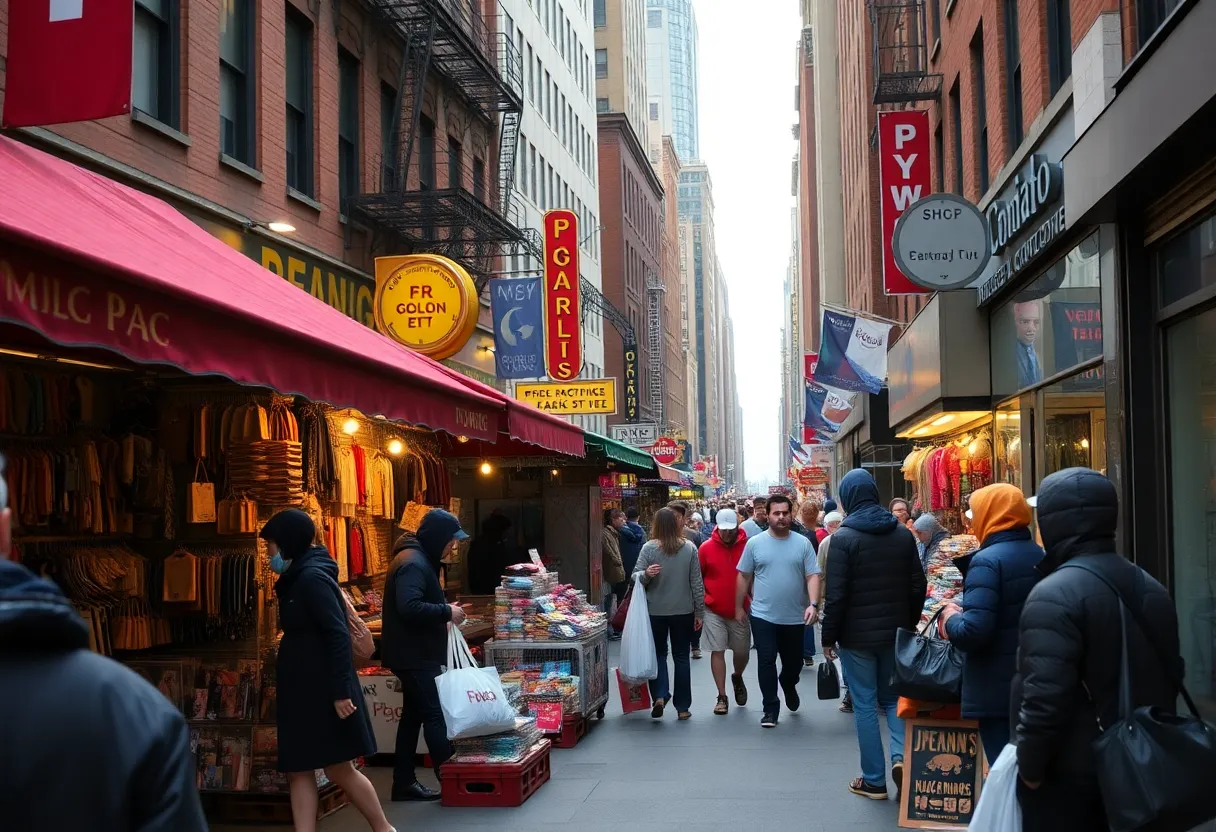
New York City’s illicit counterfeit market has made a swift comeback following a crackdown by ICE agents. Vendors have returned to Canal Street within weeks, highlighting the resilience of the illicit trade and the persistent demand for counterfeit products. Law enforcement faces challenges in enforcing against vendors who utilize innovative tactics to continue their operations. The economic implications are significant, with billions lost in tax revenue impacting the city’s resources for essential services. Local residents and business owners remain concerned about pedestrian congestion and competition with legitimate businesses.
New York City Counterfeit Market Resurges Post-ICE Raids
New York City – Despite a significant crackdown by Immigration and Customs Enforcement (ICE) agents in October 2025, New York City’s illicit counterfeit market has swiftly rebounded, with vendors returning to Canal Street and other areas within weeks.
Rapid Resurgence of Counterfeit Sales
Following the October raids targeting counterfeit goods, the streets of Canal Street, a known hub for such merchandise, were notably empty. However, within days, vendors began to reappear, setting up makeshift stalls and resuming sales. This rapid return underscores the resilience of the illicit trade and the persistent demand for counterfeit products.
Challenges in Enforcement
The swift resurgence highlights the challenges faced by law enforcement agencies. Vendors often operate with a sense of impunity, utilizing tactics such as setting up stands directly on the streets outside closed shops and using social media channels to arrange deliveries, making enforcement efforts more difficult.
Economic and Social Implications
The persistence of the counterfeit market has significant economic implications. In 2003, the Comptroller’s Office estimated that $23 billion was spent on counterfeit goods in New York City, depriving the city and its residents of about $1 billion in tax revenue. This loss affects the city’s ability to deliver essential services such as education, public safety, and sanitation.
Community and Political Reactions
The resurgence has sparked concern among local residents and business owners. Some express frustration over the ongoing presence of counterfeit vendors, citing issues such as pedestrian congestion and competition with legitimate businesses. Community leaders and local politicians continue to advocate for more effective enforcement and support for affected communities.
Background Context
New York City’s Canal Street has long been associated with the sale of counterfeit goods, including imitation designer products. Despite numerous crackdowns by law enforcement agencies, the market has demonstrated a remarkable ability to rebound, driven by persistent demand and the economic needs of vendors. The ongoing challenges highlight the complexities involved in addressing the counterfeit trade and its broader implications for the city’s economy and communities.
FAQ
What is the current status of New York City’s counterfeit market?
Despite a significant crackdown by Immigration and Customs Enforcement (ICE) agents in October 2025, New York City’s illicit counterfeit market has swiftly rebounded, with vendors returning to Canal Street and other areas within weeks.
Why has the counterfeit market in New York City been able to rebound so quickly?
The rapid resurgence highlights the resilience of the illicit trade and the persistent demand for counterfeit products.
What are the economic implications of the counterfeit market in New York City?
In 2003, the Comptroller’s Office estimated that $23 billion was spent on counterfeit goods in New York City, depriving the city and its residents of about $1 billion in tax revenue.
How have local residents and business owners reacted to the resurgence of the counterfeit market?
The resurgence has sparked concern among local residents and business owners, with some expressing frustration over ongoing issues such as pedestrian congestion and competition with legitimate businesses.
What is the background of New York City’s counterfeit market?
New York City’s Canal Street has long been associated with the sale of counterfeit goods, including imitation designer products. Despite numerous crackdowns by law enforcement agencies, the market has demonstrated a remarkable ability to rebound, driven by persistent demand and the economic needs of vendors.
Key Features
| Feature | Description |
|---|---|
| Resurgence of Counterfeit Market | Despite a significant crackdown by ICE agents in October 2025, New York City’s illicit counterfeit market has swiftly rebounded, with vendors returning to Canal Street and other areas within weeks. |
| Challenges in Enforcement | The swift resurgence highlights the challenges faced by law enforcement agencies, as vendors often operate with a sense of impunity, utilizing tactics such as setting up stands directly on the streets outside closed shops and using social media channels to arrange deliveries, making enforcement efforts more difficult. |
| Economic Implications | The persistence of the counterfeit market has significant economic implications. In 2003, the Comptroller’s Office estimated that $23 billion was spent on counterfeit goods in New York City, depriving the city and its residents of about $1 billion in tax revenue. This loss affects the city’s ability to deliver essential services such as education, public safety, and sanitation. |
| Community and Political Reactions | The resurgence has sparked concern among local residents and business owners, with some expressing frustration over ongoing issues such as pedestrian congestion and competition with legitimate businesses. Community leaders and local politicians continue to advocate for more effective enforcement and support for affected communities. |
| Background Context | New York City’s Canal Street has long been associated with the sale of counterfeit goods, including imitation designer products. Despite numerous crackdowns by law enforcement agencies, the market has demonstrated a remarkable ability to rebound, driven by persistent demand and the economic needs of vendors. The ongoing challenges highlight the complexities involved in addressing the counterfeit trade and its broader implications for the city’s economy and communities. |
Now Happening on X
- @nypost (December 16, 2025): Canal Street knock-off vendors are back with a vengeance just weeks after a dramatic ICE raid, showing they’re not afraid of enforcement. View on X
- @ViralNewsNYC (October 30, 2025): As predicted, counterfeit vendors selling fake handbags on Canal Street have returned just two weeks after a federal raid that arrested nine people. View on X
- @nickshirleyy (December 2, 2025): NYC’s Canal Street is filled with counterfeit dealers, many from Africa who arrived under recent policies, turning blocks into an illicit market. View on X
- @AlertaNews24 (November 17, 2025): After an anti-immigration campaign, counterfeit trade on Canal Street in New York has resumed strongly, with vendors quickly returning after raids. View on X
- @tribecacitizen (December 19, 2025): Counterfeit sales on Broadway in NYC are worse than ever, despite ICE threats and years of complaints, creating chaotic scenes. View on X
- @cerisezhane (December 21, 2025): Canal Street street sellers are busier than ever with people lining up for counterfeit dupes ahead of Christmas. View on X
- @VictoriaLianSF (December 19, 2025): A New York-based AI company is developing technology to help suppliers verify the authenticity of branded products, potentially disrupting the counterfeit market. View on X
Deeper Dive: News & Info About This Topic
HERE Resources
AI-Generated Scams Targeting New York Holiday Shoppers
Brighton Beach Confronts Illegal Vending Challenges