

New York City, December 15, 2025
New York City’s congestion pricing program, initiated in January 2025, has led to a 4.8% increase in foot traffic in lower Manhattan, significantly benefiting local businesses. The initiative has reduced traffic congestion by 11%, improved air quality with a 22% reduction in pollution, and increased business activities, including a near 20% uptick in Broadway attendance. Local transit ridership has also surged, contributing to overall economic growth in the area, showcasing the program’s positive impact on the city’s urban environment.
New York City’s Congestion Pricing Boosts Foot Traffic and Supports Local Businesses
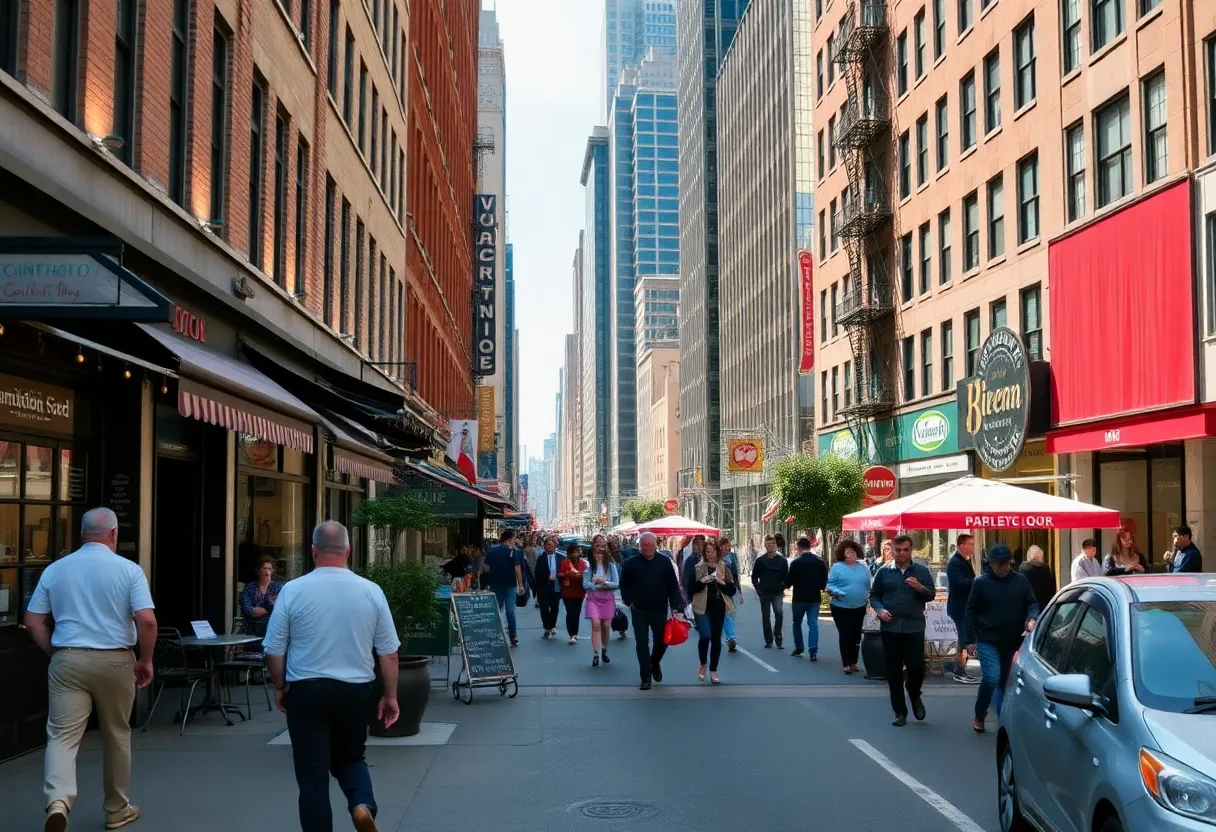
New York City has experienced a significant increase in foot traffic within the congestion pricing zone, indicating positive effects on local businesses. The city’s Economic Development Corporation (EDC) reports a 4.8% rise in pedestrian activity in lower Manhattan, compared to a 1% increase in areas unaffected by the toll. This uptick suggests that the congestion pricing program, implemented in January 2025, is benefiting the local economy by attracting more visitors to the area.
Impact on Traffic and Business Activity
Since the introduction of congestion pricing, traffic in Manhattan’s central business district has decreased by 11% compared to the previous year. This reduction has led to faster travel times, with vehicles moving up to 30% quicker on bridges and tunnels. Additionally, noise complaints have dropped by more than 70%, contributing to a more pleasant environment for both residents and visitors. These improvements have translated into increased business activity, with Broadway attendance up nearly 20%, restaurant reservations up 5%, and retail sales on track to increase by nearly $1 billion. Transit ridership has also surged, reaching post-pandemic highs across subways, buses, and commuter rail lines. Office workers in the central business district have increased by 7%, with commuters saving up to 21 minutes per daily trip.
Environmental Benefits
The congestion pricing program has also yielded environmental advantages. In the first six months, air pollution in the congestion relief zone decreased by 22%, with similar reductions observed across the city’s five boroughs and surrounding suburbs. This improvement is attributed to fewer vehicles on the road, leading to lower emissions and better air quality.
Background on Congestion Pricing
Congestion pricing in New York City began on January 5, 2025, making it the first U.S. city to implement such a program. The initiative aims to reduce traffic congestion, improve air quality, and generate revenue for public transit improvements. Vehicles entering the central business district below 60th Street are subject to tolls, with rates varying based on time of day and vehicle type. The program has been instrumental in funding $15 billion in transit improvements, including new rail cars and accessibility enhancements.
Conclusion
The early success of New York City’s congestion pricing program is evident in the increased foot traffic and business activity within the toll zone. The initiative has not only alleviated traffic congestion but also provided economic and environmental benefits, contributing to a more vibrant and sustainable urban environment.
Frequently Asked Questions (FAQ)
What is New York City’s congestion pricing program?
The congestion pricing program, implemented on January 5, 2025, charges vehicles entering Manhattan’s central business district below 60th Street. The tolls vary based on time of day and vehicle type, aiming to reduce traffic congestion, improve air quality, and fund public transit improvements.
How has the congestion pricing program affected foot traffic in lower Manhattan?
Since the program’s implementation, foot traffic in lower Manhattan has increased by 4.8%, indicating a positive impact on local businesses and the economy.
What environmental benefits have been observed due to congestion pricing?
The program has led to a 22% reduction in air pollution within the congestion relief zone in the first six months, with similar decreases across the city’s five boroughs and surrounding suburbs.
How has the congestion pricing program impacted traffic and travel times?
Traffic in Manhattan’s central business district has decreased by 11% compared to the previous year, with vehicles moving up to 30% faster on bridges and tunnels. Noise complaints have also dropped by more than 70%, contributing to a more pleasant environment.
What improvements have been funded by the revenue from congestion pricing?
The revenue from the program has been used to fund $15 billion in transit improvements, including new rail cars, accessibility enhancements, and the advancement of the Second Avenue Subway Phase 2.
FAQ Schema in JSON-LD Format
{
  "@context": "https://schema.org",
  "@type": "FAQPage",
  "mainEntity": [
    {
      "@type": "Question",
      "name": "What is New York City's congestion pricing program?",
      "acceptedAnswer": {
        "@type": "Answer",
        "text": "The congestion pricing program, implemented on January 5, 2025, charges vehicles entering Manhattan's central business district below 60th Street. The tolls vary based on time of day and vehicle type, aiming to reduce traffic congestion, improve air quality, and fund public transit improvements."
      }
    },
    {
      "@type": "Question",
      "name": "How has the congestion pricing program affected foot traffic in lower Manhattan?",
      "acceptedAnswer": {
        "@type": "Answer",
        "text": "Since the program's implementation, foot traffic in lower Manhattan has increased by 4.8%, indicating a positive impact on local businesses and the economy."
      }
    },
    {
      "@type": "Question",
      "name": "What environmental benefits have been observed due to congestion pricing?",
      "acceptedAnswer": {
        "@type": "Answer",
        "text": "The program has led to a 22% reduction in air pollution within the congestion relief zone in the first six months, with similar decreases across the city's five boroughs and surrounding suburbs."
      }
    },
    {
      "@type": "Question",
      "name": "How has the congestion pricing program impacted traffic and travel times?",
      "acceptedAnswer": {
        "@type": "Answer",
        "text": "Traffic in Manhattan's central business district has decreased by 11% compared to the previous year, with vehicles moving up to 30% faster on bridges and tunnels. Noise complaints have also dropped by more than 70%, contributing to a more pleasant environment."
      }
    },
    {
      "@type": "Question",
      "name": "What improvements have been funded by the revenue from congestion pricing?",
      "acceptedAnswer": {
        "@type": "Answer",
        "text": "The revenue from the program has been used to fund $15 billion in transit improvements, including new rail cars, accessibility enhancements, and the advancement of the Second Avenue Subway Phase 2."
      }
    }
  ]
}
Key Features of New York City’s Congestion Pricing Program
| Feature | Description |
|---|---|
| Implementation Date | January 5, 2025 |
| Toll Zone | Manhattan’s central business district below 60th Street |
| Traffic Reduction | 11% decrease compared to the previous year |
| Foot Traffic Increase | 4.8% rise in lower Manhattan |
| Environmental Benefit | 22% reduction in air pollution within the congestion relief zone |
| Revenue Utilization | Funding $15 billion in transit improvements |
Now Happening on X
- @bradlander (December 12, 2025): Reports that foot traffic in the congestion pricing zone is up significantly more than in other parts of the city, countering fears that it would reduce customers for businesses—instead, it’s having the opposite effect. View on X
- @Jalopnik (December 14, 2025): Notes that the NYC Economic Development Corporation reports a 4.8% increase in foot traffic in lower Manhattan areas affected by congestion pricing, compared to just 1% in unaffected business areas. View on X
- @Flyin18T (December 14, 2025): Shares that New York City’s congestion pricing is boosting foot traffic and helping local businesses thrive. View on X
- @FundTransitNow (December 11, 2025): Highlights data from NYCEDC showing business activity in the congestion relief zone outpacing the rest of NYC, with 4.8% foot traffic growth in the zone versus 1% citywide. View on X
- @northernck (December 14, 2025): Quotes Chris Hatch on NYC’s congestion pricing since January 2025, noting decreases in traffic, accidents, and a 45% drop in noise complaints, with expected revenue of $500 million this year and notable health benefits. View on X
- @d9monti (December 11, 2025): As a resident in the congestion zone, observes an initial significant reduction in traffic that has since partially rebounded as drivers adapt to the $9 fee, while praising the revenue raised for mass transit. View on X
- @phriendlyphotog (December 11, 2025): Argues that removing the tax subsidy of driving through congestion pricing will make suburban businesses more expensive compared to those in city centers or transit-accessible areas. View on X
Deeper Dive: News & Info About This Topic
HERE Resources
New York Times Sues Perplexity AI Over Copyright Infringement
New York City Businesses Implement Congestion Toll on Customers
Four-Alarm Fire Rips Through Santiago’s Beer Garden in East Harlem
New York City Achieves Historic Decline in Traffic Fatalities
New York City’s Businesses Struggle Amid Subway Expansion
New York City Transit Advocates Announce Pokey and Schleppie Awards
East Harlem Hotel Site Transforms into 21-Story Residential Tower
Massive Fire Erupts in Manhattan Apartment Complex
Fatal Collision in Manhattan’s West Village
Massive Car Fire Erupts in Chelsea Neighborhood